First ECE Student Awarded Steinbrenner Doctoral Fellowship
By Gwyneth Bessey
Media InquiriesAbnash Bassi is the first electrical and computer engineering student to have received the Steinbrenner Doctoral Fellowship. Her research focuses on designing efficient and environmentally sustainable data center hardware and software systems. Her current work designs holistically sustainable data center servers by considering carbon emissions and beyond-carbon metrics like water consumption, PFAS, and e-waste.
“My background in ECE has been an excellent launchpad for pursuing research in sustainable computing,” says Bassi. “With that background, I am equipped with the technical skills and problem-solving abilities necessary to explore how we can make data centers more sustainable.”
Advised by Akshitha Sriraman, and a member of the Parallel Data Laboratory at Carnegie Mellon University, Bassi received her Bachelor’s degree in Engineering Science from the University of Toronto, where she also specialized in Electrical and Computer Engineering. She has already received numerous awards for her research, including the 2025 Carnegie Institute of Technology Dean’s Fellowship, 2024 Engineers for the World Award, and the 2020 Top 25 Environmentalists Under 25 in Canada Award, and is proud to add the Steinbrenner Fellowship to that list.
The Steinbrenner Doctoral Fellowship began in 2007, three years following the Steinbrenner Institute’s inception. The institute was created to fulfill CMU’s goal “to change the ways the world thinks and acts about the environment, through our educational and research methods and results, through the issues we raise, and through the outcomes we produce.” Fellowships are awarded annually to up to four Ph.D. students who are entering their second year.
With the increased popularity of artificial intelligence applications, the demand for data centers is also rising. The energy consumption of data centers and the manufacturing of hardware used in the data centers are two big contributors to their carbon footprint, but they also use water to cool the computers and prevent overheating. While there has been prior research investigating the carbon emissions of data centers, there has been limited research on their water usage. Bassi explains that the “strategies for optimizing water consumption and carbon emissions can diverge,” so it is crucial to individually consider and evaluate both metrics for a comprehensive view of the environmental impact of data centers.
“I am honoured to receive financial support for my research through the Steinbrenner Fellowship, enabling me to work in this critical space,” says Bassi. “The visibility that the Steinbrenner Fellowship provides for our research is highly valuable for us to engage stakeholders and researchers alike in understanding how data center-scale computing can be achieved sustainably.”
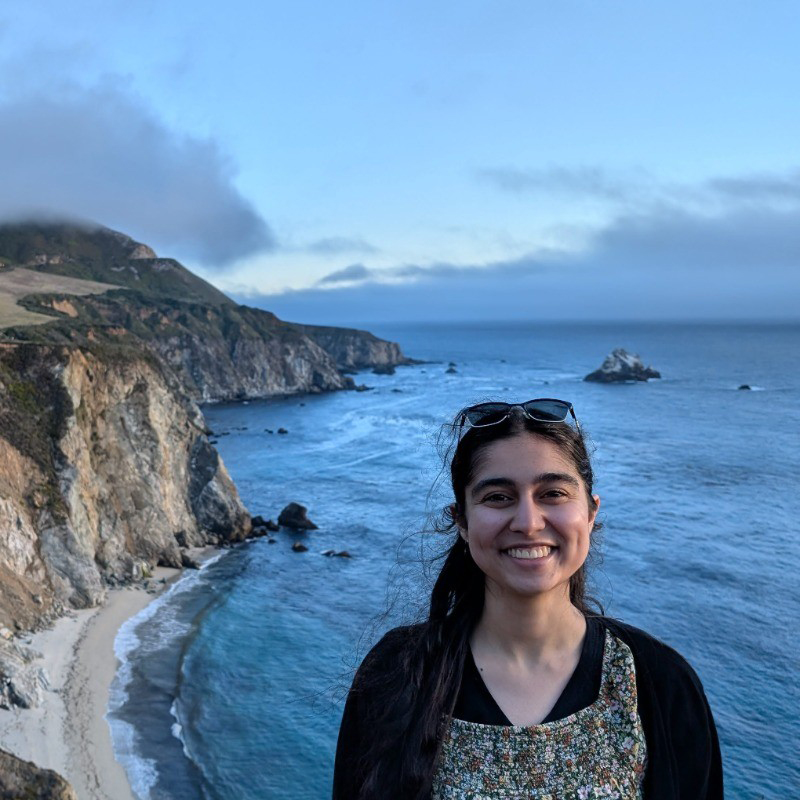
Abnash Bassi, a second-year ECE doctoral student, evaluates the sustainability and water consumption of data centers.