








|
|
|
|
|
|
|||
|
|||
Contact information: Prof. José M. F. Moura Philip L. and Marsha Dowd University
Professor Ph: +(412)268-6341 Fax:+(412)268-3890 Admnistrative Assistant Moura directs at CMU the CMU-Portugal Program launched on October 2006 and funded by the Portuguese Fundação de Ciência e Tecnologia. The Program is directed in Portugal by Professors Ines Lynce and Nuno Nunes from Instituto Superior Tecnico, Universidade de Lisboa. The first 5 years of the Program was a 100 Million dollars program. The CMU-Portugal Program was extended a sixth year and was renewed to a more focused and smaller five year Phase II (about 26 Million dollars). The CMU-Portugal Program is now in its Phase III that ends on December 31, 2023. See here for additional details and visit the Program website. Over the years, Moura has been the principal investigator of several Darpa, NSF, ONR, AFOSR, and other Agency grants. Larger Darpa efforts included OPAL (Optimized Portable Algorithm Libraries, started in 1998), DESA (Discovery and Exploitation of Structure in Algorithms, started in May 2005), both of these efforts supported Spiral. SPIRAL was also supported by other Agencies, for example, by an an NSF-ITR (medium size) grant. SPIRAL is an interdisciplinary project in the areas of signal processing, scientific computing, compilers, computer architecture, machine learning, and mathematics. SPIRAL has been licensed by SPIRALGEN, a start-up company cofounded by Moura and four collaborators. SPIRALGEN further develops and commercializes the distribution of SPIRAL. In August 2012, SPIRAL received a grant from the DARPA HACMS (High-Assurance Cyber Military Systems), and from the DARPA PERFECT (Power Efficiency Revolution For Embedded Computing Technologies) Program. In 2015, Spiral won a grant from the DARPA BRASS Program. All three were led by ECE Professor Franz Franchetti. SPIRAL is a new generation of design tools.
It applies algebraic signal processing methods to derive automatically fast SW and HW implementations of DSP algorithms. What this means is that at the click of a button SPIRAL generates automatically for the target machine say a C program for your friendly FFT, DCT, discrete wavelet transform, or FIR filter, to name a few of the possibilities. SPIRAL's claim is that this C program will run on your computer in the ball park of or significantly faster than any other existing C program. SPIRAL also generates automatically other types of implementations, e.g., netlists FPGA. SPIRAL generated implementations are high quality with respect to other performance metrics (say, area, or power consumption) that are more appropriate for HW implementations. The early work on SPIRAL is described in the invited paper SPIRAL: Code Generation for DSP Transforms (pdf), included in the IEEE Proceedings, February 2005 Special Issue on Program Generation, Optimization, and Platform Adaptation, read the Editorial (pdf). More recent work on SPIRAL is described in the invited paper SPIRAL: Extreme Performance Portability, included in the IEEE Proceedings, November 2018 Special Issue on From High-Level Specification to High-Performance Code, read the Editorial .
|
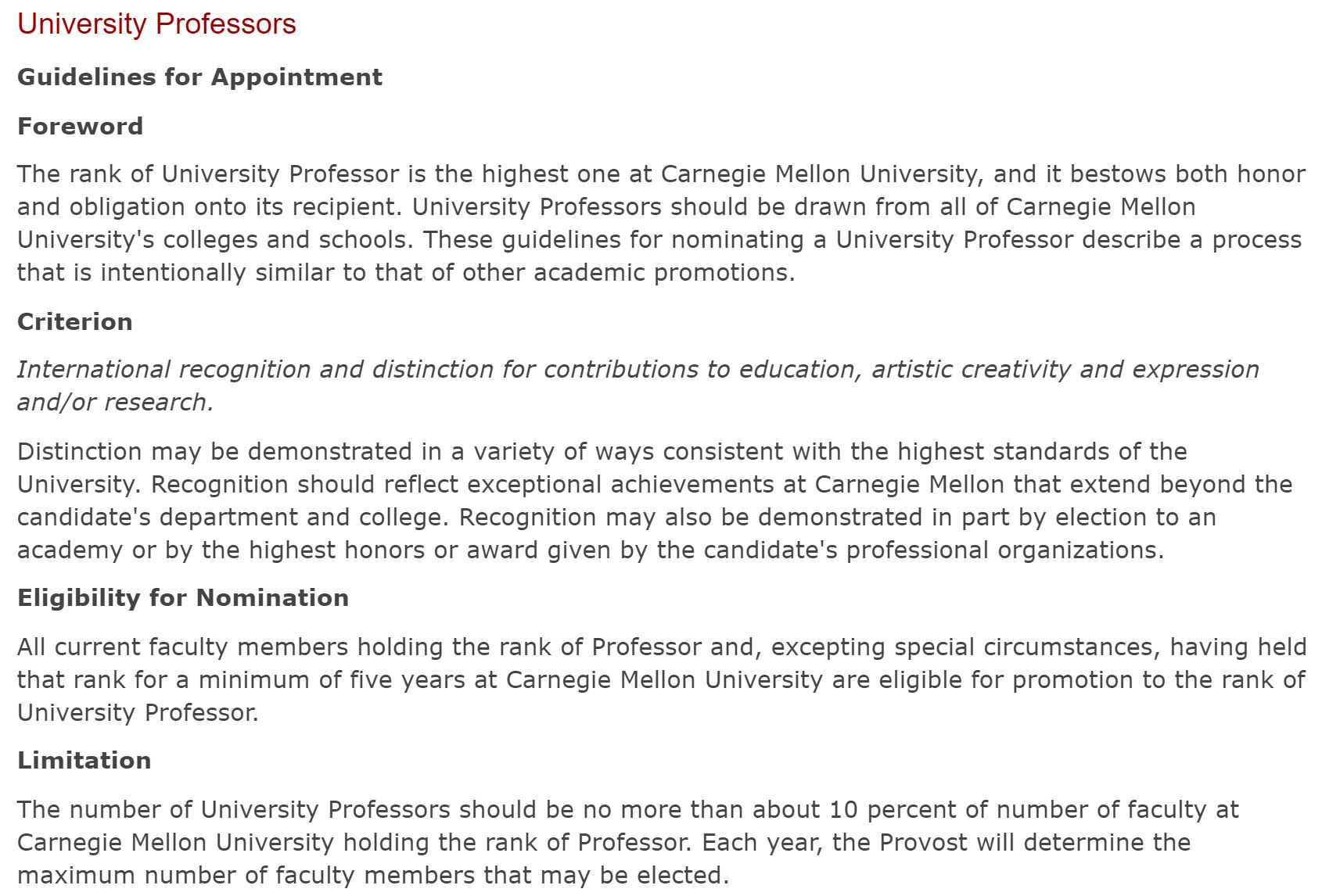
José M. F. Moura is the Philip L. and Marsha Dowd University Professor at Carnegie Mellon University, with the Electrical and Computer Engineering and, by courtesy, the BioMedical Engineering. He is a member of the US National Academy of Engineers, see IEEE Technical SPOTLIGHT announcement, a member of the Portugal Academy of Sciences, Fellow of the US National Academy of Inventors, an IEEE Fellow, and Fellow of the AAAS. He received the Grã-Cruz of the Order of the Infante D. Henrique bestowed to him by the President of the Republic of Portugal. He was awarded the 2023 IEEE Jack S. Kilby Signal Processing Medal. On February 17, 2016, CMU announced with Marvell a record $750 Million settlement on infringement of two of my patents (co-inventor, my former PhD student Alek Kavcic), find details here, here, or here. This settled a lawsuit brought by CMU and that won a verdict of $1.5 Billion, see for example here. The patented technology is in over 3 Billion chips in the diskdrives of over 60% computers sold in the last 12 years or so. This is possibly the largest ever settlement on information technology patent infringement. See this video for some insights. Moura's research group technology has been transitioned to companies, from Intel IPPGen with Intel's IPP6 library to Siemens, among others. Moura co-founded Spiralgen. He holds a D. Sc. in Electrical Engineering and Computer Science, M.Sc., and EE degrees all from MIT and an EE degree from Instituto Superior Técnico (IST, Portugal). He was a visiting Professor at the Center for Urban Science and Progress (CUSP) and at NYU in 2013-2014, a visiting Professor at MIT (2006-2007, 1999-2000, and 1984-86), a visiting scholar at USC (Summers of 79-81), and was on the faculty of IST (Portugal). Moura's research interests are in Data Science and Signal Processing on Graphs, also referred to as Graph Signal Processing, including distributed decision and inference in networked systems. Besides signal processing on graphs and analytics for Big Data, recent projects included distributed detection in sensor networks, robust detection and imaging by time reversal, bioimaging, SPIRAL, DSP on Graphs, SMART, and image/video processing. His work has been sponsored by several Darpa, NIH, ONR, ARO, AFOSR, and NSF grants, and several industrial grants. Moura received the IEEE Signal Processing Society Society Award for outstanding technical contributions and leadership in signal processing, the IEEE Signal Processing Society Technical Achievement Award for fundamental contributions to statistical signal processing. In 2016 he was IEEE Vice President for Technical Activities and IEEE Board Member and Director. In 2012-13, he was on the Board of Directors of the IEEE and serve as IEEE Division IX Director(2012-13). He has served on several IEEE Boards including the IEEE Products and Services Board, the Education Activities Board (2010), Technical Activities Board (2008-09), Press Board, the TAB Periodicals, and the TAB Publications Review Committee, and chaired the TAB Transactions Committee (joining all 80+ IEEE Editors in Chief). He served as Vice-Chair of the IEEE Publications Services and Products Board (PSPB) (2008). He was the President of the IEEE Signal Processing Society (2008-2009). He was Editor in Chief of the IEEE Transactions on Signal Processing and acting Editor in Chief for the IEEE Signal Processing Letters. He was on the Editorial Board of several Journals, including the ACM Transactions on Sensor Networks and the IEEE Proceedings. He was in the steering committee of the IEEE International Symposium on Bioimaging (ISBI) and is on the steering committee of the ACM/IEEE International Symposium on Information Procesing in Sensor Networks (IPSN). He was one of the guest editors of the 2005 February February 2005 Special Issue on Program Generation, Optimization, and Platform Adaptationand co-guest edited the 2004 January Special Issue of the IEEE Signal Processing Magazine on iterative signal processing. Moura received, in 2000, the IEEE Third Millennium Medal for outstanding achievements and contributions, the 2003 IEEE Signal Processing Meritorious Service Award, in 2006 an IBM Faculty Award. At CMU, he received in 2016 the College of Engineering Distinguished Professor of Engineering Award, the 2007 CIT Outsanding Research Award 2007 CIT Outstanding Rsearch Award(with Markus Püschel), and the 2008 Philip L. Dowd Fellowship Award for Contributions to Engineering Education. In 2010, he was elected University Professor at Carnegie Mellon University to recognize his professional achievement as well as breadth of interest and competence and which is conferred on faculty members with exceptional national or international distinction. In 2013, he was given the Philip L. and Marsha Dowd University Professorship. He contributes regularly to IEEE publications. |
FeaturesI was the 2019 IEEE President. I ran as Petition Candidate in the 2017 IEEE President Elect election, see www.josemoura.com for my position statement. On February 17, 2016, CMU announced with Marvell a record $750 Million settlement on infringement of two of my patents (co-inventor, my former PhD student Alek Kavcic), find details here or here. The patented technology is in over 3 Billion chips in the diskdrives of over 60% computers sold in the last 12 years or so. José M. F. Moura is a member of the US National Academy of Engineering ( see IEEE Technical SPOTLIGHT announcement/a>), for contributions to the theory and practice of statistical signal processing, a member of the Portugal Academy of Sciences, and Fellow of the US National Academy of Inventors. He received the Grã-Cruz of the Order of the Infante D. Henrique bestowed to him by the President of the Republic of Portugal. He was awarded the 2023 IEEE Jack S. Kilby Signal Processing Medal. He was (2014-2018) CMU ECE's first Associate Department Head for Research and Strategy. In 2013-2014, he was on sabbatical as Visiting Professor at NYU and the Center for Urban Science and Policy. See Spanish, Belarussian and Romanian translations of earlier versions of this page. See also a youtube video on aspects of his research. Besides the 2023 IEEE Jack S. Kilby Signal Processing Medal, he received the 2012 IEEE Signal Processing Society Society Award for outstanding technical contributions and leadership in signal processing , the 2010 IEEE Signal Processing Society Technical Achievement Award for fundamental contributions to statistical signal processing . In 2016, he was given the Distinguished Professor of Engineering award by the College of Engineering at CMU. In 2013 he was given the Philip L. and Marsha Dowd Chair Professorship . In 2010, he was elected University Professor at Carnegie Mellon University to recognize his professional achievement as well as his breadth of interests and competence. This title is conferred on faculty members with exceptional national or international distinction. He was awarded by CMU the 2008 Philip L. Dowd Fellowship Award for Contributions to Engineering Education and with Prof. Püschel the 2007 CIT Outstanding Research Award . He received in 2006 an IBM Faculty Award. He is the 2016 IEEE Vice President for Technical Activities and a 2016 IEEE Board Director. Prof. Moura was IEEE Division IX Director (2012-2013) and member of the Board of Directors of IEEE (2012-2013). He served on the IEEE Publications Services and Products Board (PSPB), on the PSPB Strategic Planning Committee, and on the IEEE Technical Activities Board (TAB). He is a member of the IEEE Awards Board. He was the President of the IEEE Signal Processing Society (SPS) (2008-09). He was a member of the IEEE Educations Activities Board (EAB) (2010) where he chaired the Society Education Outreach Committeee. He was Vice-Chair of the IEEE Publications Services and Products Board (PSPB) (2008). Read his editorials in the IEEE Signal Processsing Magazine (Jan 2008 through Jan 2010.) Moura has given numerous keynotes, plenaries, and invited seminaries. Moura is the Director at CMU of the Information and Communications Technologies Institute (ICTI) that manages the CMU|Portugal Program, a joint venture between the Government of Portugal and CMU. The CMU|Portugal Program was established in October 2006 and started acitivites in Fall 2007. Phase I (5+1 years) was a 100 Million dollar initiative supported by the Portuguese Science and Technology Foundation (FCT) and several Portuguese Companies, including Portugal Telecom, Siemens Networks, S.A. (now Nokia Networks), and NovaBase. Phase II of the Program (5 years) started in 2012. The CMU|Portugal Program has involved in its activities close to 100 companies, graduated over 220 Professional Masters dual degree students, and involves over 80 PhD dual degree students. The Program has supported close to 40 joint large research projects, sponsored close to 60 faculty exchanges, and has an undergraduate internship program. Moura co-founded and co-directs CenSCIR, the Center for Sensed Critical Infrastructure Research, see the ECE news or the CMU press release. Professor Moura introduced in Spring 2011 a graduate level course 18-799 H Network Science: Modeling and Inference. He has taught the sophomore level 18-202, Mathematical Foundations of Electrical Engineering course, the junior level 18-396 Signal and Systems course, and the graduate courses 18-751 Applied Stochastic Processes and 18-752 Detection, Estimation, and Identification. He also introduced and taught 18-899 Algebraic Signal Processing. Moura's research interests include Data Science and Network Science. Current and past projects have included Cognitive Networks, Global Behavior in Large Scale Systems, and distributed inference algorithms on graphs. Other research area of interest is statistical theory of shape: Shapes provide a rich set of clues on the identity and topological properties of an object. In many imaging environments, the same object appears to have different shapes due to such distortions as translation, rotation, reflection, scaling, or shearing. Also, the correspondence between pixels of different distorted images of the same object is usually unknown. Our work looks at shape invariants and at the geometry of the shape space addressing questions like 'how close are two shapes' or 'how do we morph one shape into another.' |
Home | Research | Publications
& Seminars | Research Team | Professional Activities
Bio Data & Teaching | Site Index
Electrical & Computer Engineering Home | Carnegie Mellon Home
Last updated 30 April 2005.